
Why Trees Matter 🌳The Hidden Value of Trees & Strategic Benefits for Council Infrastructure Management

Updated: Dec 2, 2025
Trees are often viewed simply as part of the urban landscape, adding beauty to streets, reserves and public spaces. For many councils, however, their importance extends far beyond aesthetics.

Welcome to the Iamdata Solutions Asset Management Newsletter - December 2025
Last weekend, I was helping my husband remove a tree in our garden, well I held the ladder while he was up there confidently wielding the chainsaw. Things were going ok until one branch decided it was going to defy gravity. Rather than dropping straight down to the grown out of harms way, it swung around like a deranged boomerang and smacked me on the head.
I’m fine, just a duck-egg lump and a week of concussion. I don't think I've ever had concussion before. It felt exactly like being hungover without any of the fun parts leading up to it.
As I laid there all last week, trying to stop the room from spinning, I had a lot of time to think. Mostly about trees… and the fact that I still love them, even if some of them clearly have attitude. So, I'm dedicating my final Asset Management post of 2025 to making the case for more urban greenery. Today, I'm celebrating what trees do for us and why I think we need to plant more of them.
Why Trees Matter
Trees function as natural assets that improve the condition, performance and longevity of the built assets councils manage every day. When approached strategically, our urban canopy becomes a key component of long-term financial sustainability and improved service delivery.
Trees Reduce the Cost of Maintaining Infrastructure Assets
One of the most compelling reasons for councils to pay close attention to their urban forest is the direct impact trees have on asset deterioration rates. Shaded roads can be cooler, and while this applies most obviously to surface layers (asphalt, concrete) it also has relevance for the underlying structural pavement layers.
Many studies have found that street trees and shading correlated with better asphalt pavement performance. (McPherson & Muchnick, 2005). https://auf.isa-arbor.com/content/31/6/303
Reducing surface temperatures in our hot Australian summers, tree canopy slows oxidation, minimises cracking and helps extend the useful life of the surface layer and pavement layer.
Councils that invest in higher canopy coverage along high‐heat corridors often report fewer defects, longer reseal or overlay cycles, and reduced reactive maintenance.
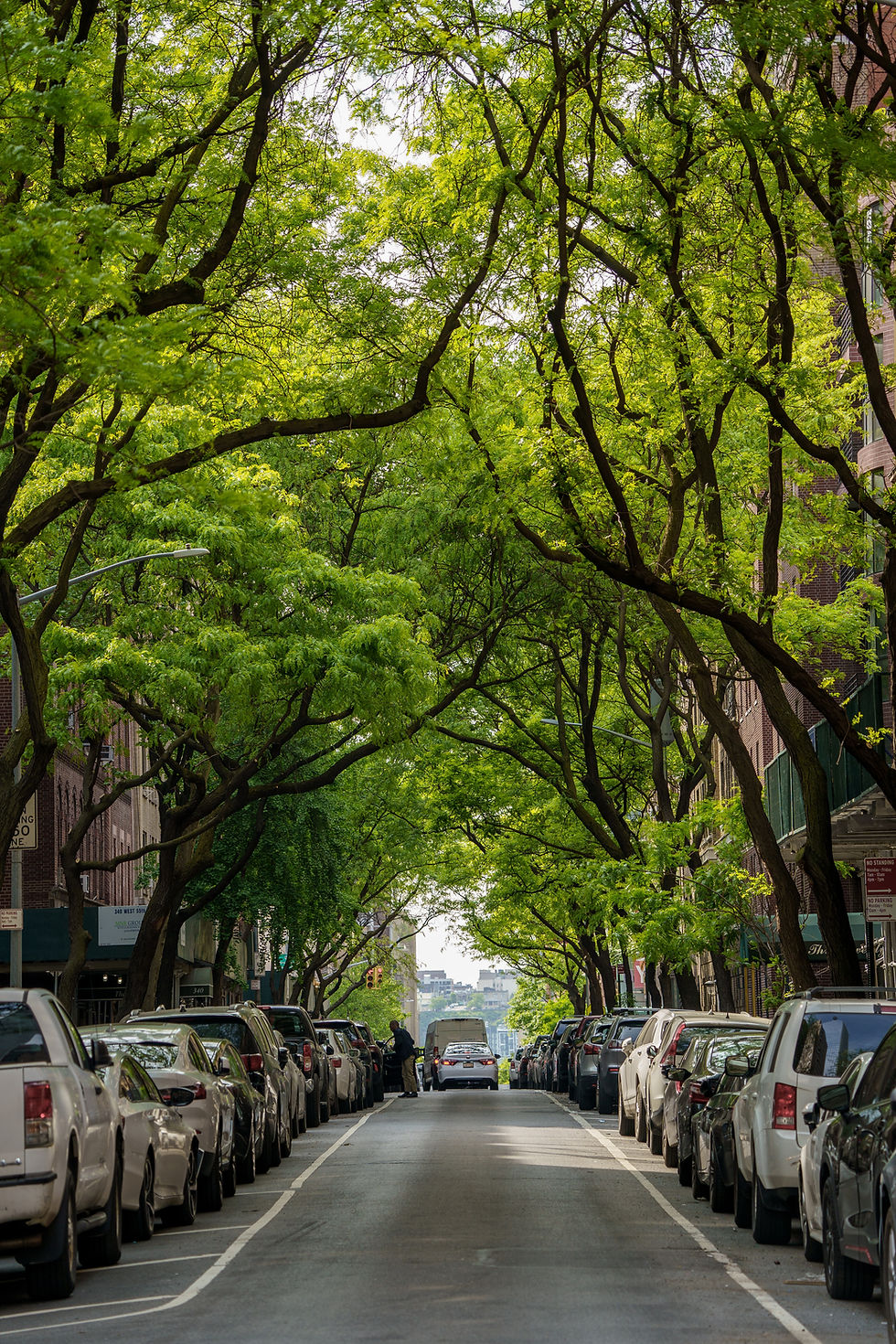
Trees also play an important role in stormwater management. Tree canopies intercept rainfall before it hits the ground, while root systems increase infiltration and reduce runoff volumes entering pits, pipes, channels and drains.
This comprehensive review shows trees can reduce stormwater runoff via canopy interception, transpiration and improved infiltration. https://pmc.ncbi.nlm.nih.gov/articles/PMC6134866/
From an asset lifecycle perspective, trees can therefore reduce the need for costly stormwater system upgrades due to capacity constraints.
Bioretention tree pits take this a step further by managing stormwater at the source. Instead of simply planting a street tree in a small pit, these systems are engineered as mini biofilters. Runoff from the road and adjacent hardstand enters through kerb inlets, ponds temporarily in the pit, then filters down through a specially designed soil media and gravel drainage layer before being discharged to the conventional pipe network via underdrains.

Along the way, sediments, nutrients and heavy metals are removed, while a portion of the water is taken up by the tree or infiltrates locally, reducing the volume and pollutant load reaching downstream assets.
Tree-box filters and proprietary WSUD tree pits used in Australian streetscapes have been shown to significantly reduce total suspended solids and nutrients in outflow, demonstrating that well-designed bioretention tree pits can function as compact, streetscape-scale treatment assets that protect downstream pits, pipes and waterways.
Trees Improve the Condition and Performance of Surrounding Infrastructure
Beyond cooling and stormwater interception, trees create stabilising effects on surrounding soils and micro-climates. In parks, reserves or unsealed roadside zones trees help reduce erosion and sediment movement.

In urban streetscapes trees help regulate microclimate conditions, mitigating extremes of heat, moisture and wind. These benefits support service levels and help councils maintain assets in a safer, more resilient state.
Tree canopy cooling has been systematically reviewed. Tree canopies lower air temperature and surface temperature across urban, block and community scales. https://www.mdpi.com/2071-1050/16/12/4955
When footpaths and pavements are in a more stable microclimate (less extreme heat/moisture shifts), they tend to exhibit fewer expansion, subsidence or deformation issues. For councils, this means fewer maintenance events and improved user experience.

Trees Extend Asset Lifecycles and Support Better Long-Term Planning
When we recognise how trees influence asset condition and integrate canopy data into our Asset Management Plans, we gain a more accurate understanding of lifecycle performance. A road section with consistent shading may last several years longer than a comparable unshaded section. Footpaths in shaded residential areas often show fewer deformation issues linked to extreme heat and variable moisture.
If you integrate your tree/canopy data with your infrastructure asset data, you can model these relationships, identify vulnerability hotspots, and quantify where strategic planting could defer future renewals.
A valuation study on ‘living infrastructure’ (trees) in an Australian city-context found that scenarios expanding canopy cover had benefit-cost ratios >1 (i.e., benefits exceeded costs) when combined with asset planning. https://research.csiro.au/darwinlivinglab/wp-content/uploads/sites/278/2020/05/Valuing-the-benefits-of-urban-trees-and-green-space-.pdf
This approach aligns closely with the principles of ISO 55000 (optimised decision-making, cost-effective service delivery).
Trees Reduce Risk and Improve Community Safety
The cooling benefits of trees are well established and should be viewed as a community safety measure, not just an environmental one. Streets with adequate canopy reduce heat exposure for pedestrians, older residents, school children, and council field crews. In extreme weather conditions, shaded footpaths and parks can help reduce heat-related community risks.
Trees also contribute to safer road environments. Tree-lined streets create a natural traffic-calming effect by reducing perceived road width, which can result in lower vehicle speeds without the need for high-cost engineered interventions. When designed correctly, trees also balance light and shade, reduce glare, and improve driver visibility in certain environments. https://rosap.ntl.bts.gov/view/dot/32271

Trees Increase Community Value and Public Space Amenity
Beyond infrastructure performance, trees significantly influence community wellbeing. Shaded, attractive streetscapes support walking, cycling and outdoor activity. They contribute to improved air quality and noise reduction.
Studies show that urban tree cover also increases property values. One Australian study about street trees and house sale prices found significant value premiums. https://economics.uq.edu.au/files/46155/563.pdf
Many councils report that investment in tree planting yields some of the highest levels of community satisfaction compared with other public-works initiatives. This makes trees a strategic enabler of council goals relating to liveability, amenity, environmental sustainability and community health.

The Importance of Treating Trees as Infrastructure Assets
Realising the full value of trees requires councils to manage them as rigorously as the built infrastructure assets such as roads, footpaths, drainage networks and structural pavements. That means maintaining a complete and accurate tree inventory. Tracking health, species, size, age, risk profiles and linking this data with other asset classes.
This data can be integrated with road/pavement condition data and analysed to help highlight where gaps in tree coverage contribute to higher maintenance costs and faster deterioration.
Modern systems now make this accessible. Relational databases (e.g., SQL Server), GIS platforms (QGIS, ArcGIS, MapInfo) and reporting/visualisation tools (Power BI) enable integrated analytics, dashboards and evidence-based decision-making.
When Trees and Infrastructure Clash
Trees are wonderful, but I know councils deal with some frustrating conflicts between trees and the built infrastructure.
Tree roots and concrete don't always play nice together. Studies have found that street tree roots often lift or crack footpaths and kerbs, especially when trees are crammed into tight spaces with poor design. It is not just about root damage. Trees squeezed into heavily paved areas face a whole host of challenges, not enough room for roots to grow, conflicts with power lines and underground services, footpaths getting pushed up, and constant pruning needed to keep branches away from cars and pedestrians.
If you plant a tree in a tiny strip with barely any decent soil, it is going to go searching for water wherever it can find it, under footpaths, along road edges, near service trenches. That's when you start seeing cracked concrete, damaged pipes, and broken cables.
There are also safety concerns councils must take into consideration. Sometimes trees fail, a branch drops, or a whole tree comes down in a storm. There have been many research projects tracking tree failure incidents that shows just how costly and serious these events can be. This is why councils must be proactive with tree inspections and risk management.
Beyond the physical damage, some tree species just create headaches. We are talking about trees that drop mountains of leaves and fruit that clog up drains, aggressive roots that undermine house foundations, pollen that sets off everyone's allergies (looking at you, London plane trees in Melbourne!), or trees that become fire hazards in bushfire-prone areas.
These problems are real and measurable, and councils absolutely need to manage them. But they are not a reason to give up on trees. They are a reason to get smarter about how we do things, for example, better design, choosing the right species for the right spot, and thinking carefully about where we plant.
Strategic Tree Planting as an Asset Intervention
One of the most powerful insights in contemporary asset management is that tree planting can be used as a deliberate, cost-effective infrastructure strategy. Targeted planting along high-heat corridors, problem footpaths, or stormwater hotspots can extend the lifecycle of surrounding assets, reduce risk and defer major capital expenditure.
In many cases, planting trees provides benefits equal to, or greater than, traditional engineering solutions, at a fraction of the cost. Councils that adopt this approach gain a more resilient road network, healthier and more connected public realm, and a long-term financial uplift across their asset base.
Do the Benefits Outweigh the Problems?
When you look at both sides of this question, the evidence consistently shows that, at a network scale, the benefits of street trees outweigh the costs of infrastructure damage and maintenance, provided trees are reasonably well designed and managed. There have been several cost-benefit studies from different contexts that illustrate this. These studies all acknowledge infrastructure damage and management costs including road repairs, pruning, inspection and risk management but still conclude that the net benefit is strongly positive when you consider cooling, stormwater reduction, air quality, property value uplift and community wellbeing.
At an individual tree or individual site level, a poorly chosen or poorly placed tree can absolutely 'cost' a council more than it gives back (e.g. roots in a shallow, narrow verge lifting footpath slabs and damaging house footings).
At a network level, with decent species selection and siting, the weight of evidence is that street trees provide several dollars of benefit for every dollar spent on planting, maintenance and damage repair.
And, at this time of year, there's one special type of tree, our Christmas trees... symbolise a sense of togetherness, warmth, and celebration. For many people, the act of putting up a tree signals the start of a joyful season filled with connection, family traditions, and moments of slowing down and signifies the spirit of giving, reflection, and appreciating the people and experiences that matter most.

Merry Christmas Everyone!
And just in case anyone reading this is now thinking of removing one of their own weed trees, please be safe, call a professional, and don’t trust that a branch with do what you expect it to do.

I have worked on many different projects with my Local Government clients, from designing and developing Power BI Reports, to building SQL Server databases for spatial data, to managing and maintaining GIS and the Asset Management systems. If you'd like to discuss how we might work together, then please email Jill at ➡️ jill.singleton@iamdata.solutions
If you would like to receive the latest Newsletter Blog straight to your inbox, please subscribe here: ➡️ https://www.iamdata.solutions/subscribe
You can read all our Newsletters and Blogs here:➡️ https://www.iamdata.solutions/blog
You may also be interested in our Projects Page:➡️ https://www.iamdata.solutions/past-projects
Check out what our clients say about us here:➡️ https://www.iamdata.solutions/reviews
If you would like to see a particular topic covered in these newsletters, then please let me know about it. The chances are other people will be interested and would like to hear about it too! Please email me at: ➡️ jill.singleton@iamdata.solutions with your suggestions.


Comments